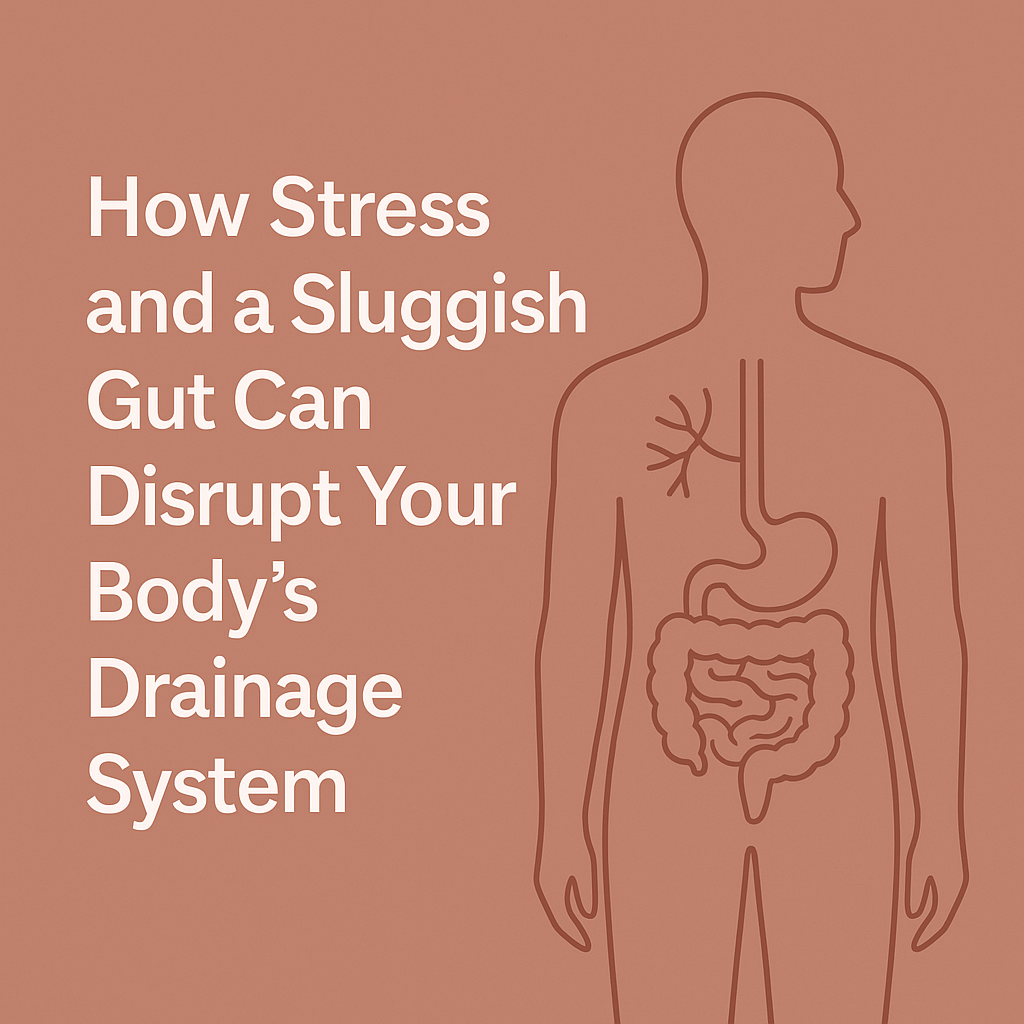
You might expect stress to show up as tension in your shoulders or a knot in your stomach. However, it can also quietly slow your body’s drainage system, starting deep in your abdomen. When your gut is sluggish, fluid movement through the cisterna chyli — the main hub for lymphatic drainage — can stall. As a result, swelling, low back pressure, fatigue, and that heavy, “off” feeling can appear, even after a full night’s sleep.
Your Body Literally Shapes Itself Around Stress
Planning a wedding. Starting a new job. Moving to a new home.
Your nervous system treats these as threats, not just calendar events.
It changes the way you breathe, stand, and move to protect you. Even after the stress ends, your body can keep the shape.
That tight neck? Shallow breathing? Sore hips after a workout? They might be the leftover imprint of stress your body never fully released.
From Stress to Lymph Flow: The Hidden Link
When the spine grips, lymph flow slows — especially near your cisterna chyli, your body’s main lymphatic drainage hub located deep in your abdomen. Over time, this creates a ripple effect through your body.
Chronic stress restricts your breathing, which forces your spine to compensate. That compensation changes lymph flow. Changed lymph flow leads to that “off” feeling — heavy joints, sluggish energy, and discomfort that moves around without a clear reason.
Stress patterns can also show up in the jaw. Clenching or grinding creates tension in the muscles and connective tissue around the jaw, which can restrict lymph drainage in the face, ears, and neck. This tension may feel like pressure, puffiness, or aching that radiates to the temples. When lymph flow in this area slows, nasal congestion can worsen because drainage from the sinuses is less efficient. The combination of jaw tension and nasal congestion can make breathing feel more restricted, pushing you further into shallow, mouth-based breathing and keeping your nervous system on high alert.
If your gut is sluggish on top of this, cisterna chyli flow slows even more. That can contribute to bloating, swelling, low back pressure, and fatigue.
Why This Matters for Your Health
These stress-driven patterns don’t just affect posture — they change how your body functions.
-
Breathing – that feeling of never getting a full breath, even when you’re not anxious
-
Movement – when simple activities like reaching overhead or getting out of bed feel harder than they should
-
Energy and recovery – waking up tired, or feeling puffy and sluggish even after rest
-
Pain patterns – tension that moves around your body or returns in the same spots
Why This Work Lasts Beyond a Massage
A massage can feel amazing for releasing tension in the moment. In contrast, if your body has been stuck in a protective pattern for months or years, the relief may be short-lived.
My work focuses on restoring your body’s ability to stay in recovery mode — not just during the hour we work together, but in the hours and days afterward. When your muscles, breathing, and lymphatic system begin working together again, you can hold onto that relaxed, balanced state for longer instead of starting over each time.
Not All Stress Creates Rigidity
Stress doesn’t just make you stiff — sometimes it creates the opposite problem.
For some people, flexibility outpaces strength, which can make the body rely on gripping through the jaw, feet, or smaller stabilizing muscles for a false sense of stability. This can lead to:
-
Rounded shoulders
-
Tight hips
-
Tension during basic movements
-
More effort from the nervous system to stay balanced
Whether you’re hypermobile or not, stress can disrupt your natural stacking and create what I call functional disconnection — when your body stops working as an integrated whole.
Where to Start
Small, consistent steps can help you reconnect with your body and improve both stress patterns and lymph flow:
-
Release the grip in your jaw by gently opening and closing your mouth, then letting your tongue rest softly
-
Breathe by placing one hand on your chest, one on your ribs, and feeling your ribs expand sideways on the inhale
-
Restack by imagining your head floating up while your ribcage settles over your pelvis
With regular practice, your body can shift out of “go mode” into a state where it can relax, recover, and repair.
Your body is designed to adapt — and it’s also designed to recover. The question is: are you giving it the right conditions to do both?
