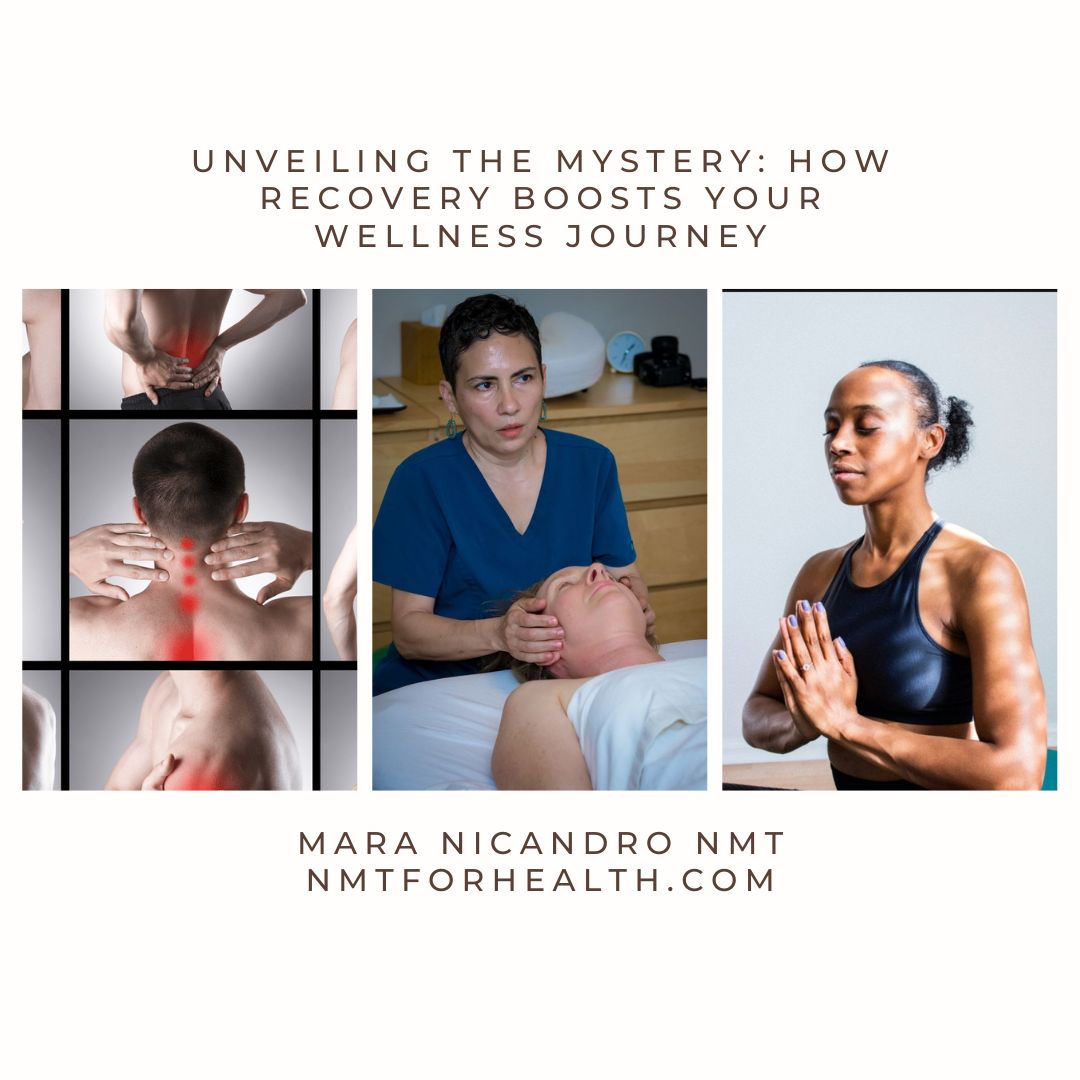
Why your neck or back may keep doing more when you reach, turn and walk
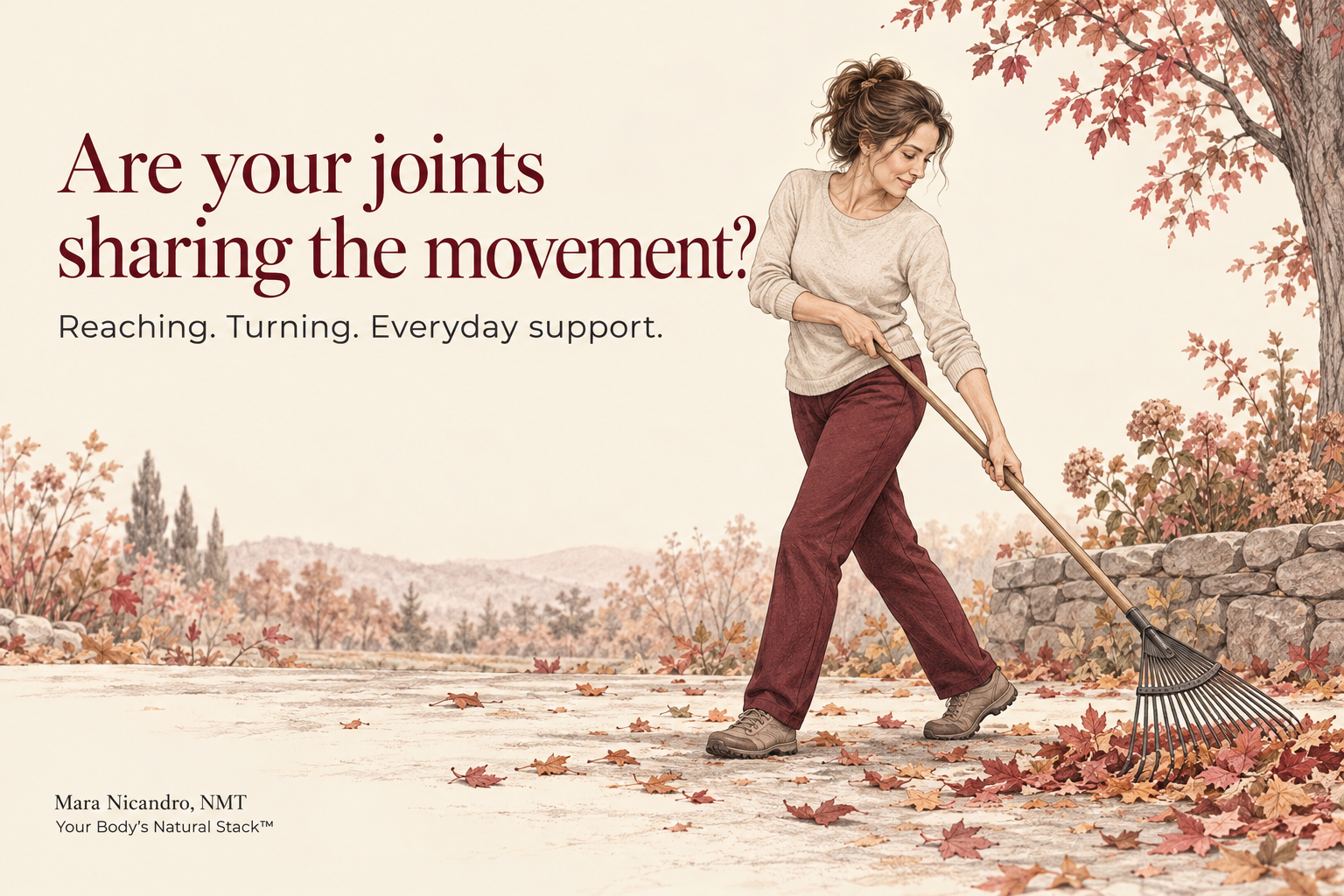
You turn to look behind you, and your neck feels like it is doing all the work. You reach into a cabinet, and your shoulder rises toward your ear. You rake leaves, and your low back feels busy with every pull.
You may exercise regularly and feel more comfortable afterward. Yet the familiar holding returns as you move through your day.
One question I explore in my practice is: how are your joints contributing to the task, and where is effort concentrating?
Add this after the opening examples, before “What sharing movement means.”
The moment you notice pain may not tell the whole story
You may first notice your low back during an everyday task, such as raking leaves, lifting groceries or reaching into a cabinet. Sometimes pain begins suddenly. Other times, discomfort develops gradually or keeps returning.
That moment does not always explain everything contributing to how you feel. Daily demands, changes in activity, stress, sleep and recovery can all play a part. How your body shares movement and effort is one part of that picture.
You do not need to wait until discomfort becomes constant to seek support. Recurring symptoms deserve attention. Exploring when they appear, what makes them easier or harder, and how you move can help guide care and support more comfortable daily activity.
What sharing movement means
When you turn to look behind you, the movement may involve your neck, trunk and hips, depending on the task. When you bend or reach, your spine, hips, knees and ankles contribute in different amounts.
Sharing movement does not mean every joint should move equally. Each task requires its own combination of movement and support. Sometimes one area needs to remain steady while another moves.
The useful question is whether you have comfortable options, or whether you repeatedly rely on the same area and the same holding strategy.
Why the neck may keep gripping
Imagine reaching overhead and noticing your jaw clench, your shoulder rise and your breath pause. Or turning your trunk and feeling your neck work harder.
These are observations to consider. They do not establish that a particular muscle is contributing less or that another joint is restricted.
In an assessment, I look at whether changing support, position, range or breathing changes the response. Does the reach become more comfortable? Can the person turn with less neck effort? Does the change remain when they return to the original task?
The neck is participating in a coordinated task. Assessing that task gives us more information than looking at the tense area alone.
If you spend much of your day holding yourself still, your neck may benefit from more opportunities for comfortable movement. Changing position, turning and reaching in different ways can bring variety into how your body finds support.
A pelvic tilt offers another example
During a pelvic tilt, the pelvis and lower back normally move together. The movement can be small. Notice whether you can make this movement comfortably and continue breathing, or whether you use considerable buttock gripping, push through your feet or force a larger back movement.
Muscle activity is expected. Its amount and usefulness depend on the task. Changing the position, cue or range can help us compare different ways of performing the movement.
A pelvic tilt is one example to assess. It cannot identify the cause of someone’s back pain or tell us everything about how their hips and spine contribute during walking.
The same questions matter when you rake leaves or turn to put them into a bag. Your hips, pelvis, trunk and feet can contribute as you reach and change direction. Can you adjust your stance and turn comfortably, or does your back repeatedly carry most of the movement? The task, reach and available space all influence how you move.
How your body finds support
Your nervous system continually uses information from your eyes, inner ears, muscles and joints to coordinate balance and movement. As you reach, turn or lift a leg, it adjusts muscle activity to meet the changing demands.
This is part of what we mean when we talk about finding center. Your center of mass moves as you move. Support needs to adapt with it.
Sometimes your body finds steadiness through extra holding. Your toes grip the floor. Your back stiffens. Your jaw clenches.
That holding can be a protective strategy. Research on motor adaptation to pain describes how the nervous system can redistribute activity within and between muscles in response to pain or perceived threat. The adaptation may help protect an area initially, while also changing loading and limiting movement variety if it continues. [1]
Gripping alone does not tell us which joint needs protection, whether tissue is damaged or why the strategy developed. It gives us something to look at.
Why stretching can feel helpful
Stretching can improve range of motion through changes in how much stretch you tolerate and, depending on the practice, changes in tissue stiffness. Feeling more comfortable in a stretch does not necessarily mean the muscle was physically too short beforehand. [2]
Yoga also includes movement, breathing and attention. Its benefits are broader than stretching alone. Research in people with chronic nonspecific low back pain finds small average improvements in pain and function compared with no exercise. [3]
That relief matters.
When familiar holding returns, I check whether your everyday way of finding support has changed along with your comfort. Relief and a change in movement coordination do not always happen together. The assessment helps us examine that possibility rather than assume it.
Why more effort may feel different
Pilates can support movement control and improve pain and function in people with low back pain. Research has not consistently shown it to be better than other exercise. [4]
During a demanding exercise, abdominal effort and bracing can be useful. What matters is whether you can adjust that effort as the demands change.
If you already use considerable holding to feel steady, a cue to tighten more may be worth modifying. You might try less resistance, a smaller range or a different position with your instructor and compare the response.
Notice whether your jaw clenches, your shoulders draw upward or your breath pauses. These observations do not prove that you are moving incorrectly. They help you and your instructor understand how you are meeting the demand.
Symptoms can also increase because the range, intensity or duration exceeds what you currently tolerate. Some yoga trials reported increased back pain, so discomfort afterward should not automatically be attributed to a gripping pattern. [3]
The same class can feel different on another day
Your practice takes place within the rest of your life.
Sleep, illness, emotional stress and recent activity can change how you feel and what you can comfortably manage. Research links disrupted sleep with greater pain sensitivity, while the relationship between stress and pain is complex. [5,6]
Thinking about demands and resources can still be useful. After poor sleep or a demanding week, a shorter practice or less effort may suit you better. That is a way to adapt your practice to your current capacity.
What happens after class matters too
Notice how long the comfort lasts and what happens when you return to your day. Can you sit at your desk, walk or turn your head more comfortably? Does your jaw begin clenching again? Do you hold your breath while concentrating or reaching?
These observations help us assess carryover. In motor learning, retention means a change persists over time; transfer means it carries into another task or setting. Feeling better after class, keeping that benefit and using a different movement strategy in daily life are related but distinct outcomes. [7]
In a stacking assessment, I assess your joint positions, how you move and breathe, and how support shifts between your feet. Proprioception is your sense of position and movement. Visible alignment alone cannot tell us how accurately you sense a joint or establish why you are holding it that way.
A benefit that lasts only a short time can still be worthwhile. If symptoms repeatedly return, it is useful to explore daily demands and movement habits as well as the practice itself.
Building capacity and everyday options
Returning tension does not mean the benefits of your exercise have disappeared. You may be building physical capacity while a familiar holding strategy persists.
The way you usually move is familiar. Practicing another comfortable option can help that option become more familiar too. This does not mean forcing every repetition to look the same. We compare what suits the task and whether the change remains available later. [7]
You do not have to change everything at once. With raking, that might mean trying a shorter reach or adjusting your stance, then comparing how it feels to turn. The aim is to develop options you can use in daily life.
Alongside exercise, it can be useful to practice the activities in which the holding appears: standing, walking, turning, reaching or getting out of a chair. We compare responses and gradually build the demand, with enough recovery to support the process.
Progress might mean turning more comfortably, walking longer before discomfort begins, or using less unnecessary neck effort during a familiar reach. We also look at how long the benefit lasts.
How your hips, pelvis and feet work together can influence the ease of walking, including that feeling of spring in your step. We can look at their contribution as your foot meets the ground and support shifts from one leg to the other. That feeling is something to notice alongside comfort and function, rather than a test of any single joint.
Your diagnosis is part of the picture
An existing spinal diagnosis matters. It does not, by itself, describe how you coordinate every movement.
Research shows that some degenerative imaging findings occur in people without pain, while some findings are more common in people with symptoms. Their significance needs to be interpreted alongside the person’s history and examination. [8,9]
Movement assessment can identify opportunities for improving comfort and function alongside a diagnosis. A better response does not mean a structural finding has disappeared.
What I look for in an assessment
When someone describes recurring tension, I assess how they stand, breathe and move, alongside the area that feels uncomfortable.
Can they shift support from one leg to the other comfortably? Turn without increasing jaw or neck effort? Use support during a movement and ease that effort when it is no longer needed?
The aim is to help the body develop more options for support, so a familiar protective strategy does not have to carry every movement.
Your body adapted. We can explore whether that adaptation still serves you and what helps you move with greater comfort.
References
- Hodges and Tucker. Moving differently in pain: a new theory to explain the adaptation to pain. https://pubmed.ncbi.nlm.nih.gov/21087823/
- Mechanisms Underlying Range of Motion Improvements Following Acute and Chronic Static Stretching. https://pubmed.ncbi.nlm.nih.gov/40180774/
- Cochrane. Yoga for chronic nonspecific low back pain. https://www.cochrane.org/evidence/CD010671_yoga-chronic-non-specific-low-back-pain
- Cochrane. Pilates for low back pain. https://www.cochrane.org/evidence/CD010265_pilates-low-back-pain
- The association of sleep and pain: an update and a path forward. https://pubmed.ncbi.nlm.nih.gov/24290442/
- A Systematic Review of Biological Mechanisms and Chronic Pain Outcomes During Stress Reduction Interventions. https://pubmed.ncbi.nlm.nih.gov/32174159/
- Learning better by repetition or variation? Is transfer at odds with task-specific training? https://pubmed.ncbi.nlm.nih.gov/28333997/
- Systematic literature review of imaging features of spinal degeneration in asymptomatic populations. https://pubmed.ncbi.nlm.nih.gov/25430861/
- MRI Findings of Disc Degeneration are More Prevalent in Adults with Low Back Pain than in Asymptomatic Controls. https://pubmed.ncbi.nlm.nih.gov/26359154/

Leave a Reply
You must be logged in to post a comment.