
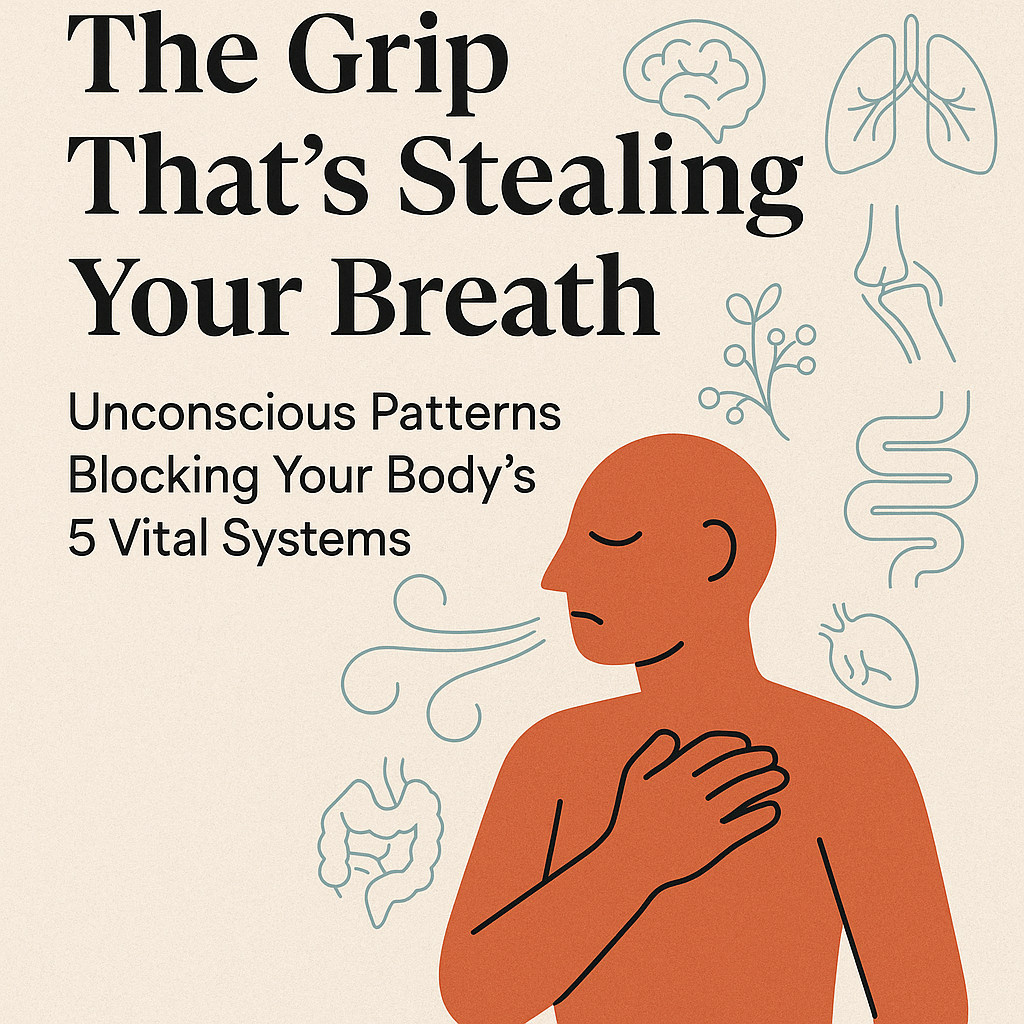
Why chronic pain, brain fog, and exhaustion might be your nervous system’s protection response and how to help your body feel safe enough to let go
If you’re fighting chronic pain, brain fog, and exhaustion, you are not alone. Your body may be running on unconscious gripping patterns that block breath, mobility, and recovery. What started as your nervous system’s protection response has quietly become your baseline, and it is costing you more than you realize.
Your body might be gripping in ways you do not even notice. And it is blocking everything.
Your nervous system learned these patterns to keep you safe. What began as protection has become your default setting.
How Unconscious Gripping Patterns Form Without You Realizing It
You might notice gripping in small moments throughout the day:
• Jaw clenched while you scroll
• Toes curled while you stand
• Pelvic floor held tight while you sit
• Breath shallow and high in your chest
These are not random tension spots. They are unconscious gripping patterns that block five major systems in your body.
The 5 Systems Blocked by Unconscious Gripping Patterns
1. Lymphatic Drainage
When muscles stay contracted without release, lymph fluid cannot move. The lymphatic system needs a squeeze and release motion to circulate. Without release, fluid stagnates and waste builds up.
This creates:
• Brain fog
• Puffiness
• Chronic inflammation
• Slow recovery
Even perfect hydration or a clean diet cannot fix a system that is mechanically blocked.
2. Breathing Capacity
Chronic gripping restricts the ribcage, diaphragm, and pelvic floor. Your diaphragm is your primary breathing muscle, but when the ribcage is collapsed and the pelvic floor is held tight, your diaphragm cannot descend the way it should.
Your body compensates by using your neck and chest muscles to breathe. This breathing pattern signals danger to your nervous system and keeps you in stress mode.
Signs this is happening:
• You feel like you cannot take a full breath
• Your ribs barely move
• You sigh often
• Your belly moves more than your ribs
• You feel breathless even at rest
When rib motion returns, breathing becomes effortless and energy improves.
3. Rotation and Mobility
Healthy movement requires rotation. Walking, reaching, turning in your car, and lifting all rely on natural spiraling.
Unconscious gripping patterns lock you into straight-line movement. Everything becomes rigid and compensatory.
This is why stretching often does not help. You are stretching muscles that are locked inside a pattern the nervous system is still trying to maintain.
4. Physical Reactivity
Muscles that are already gripping cannot respond to sudden demands. A muscle that is always at partial contraction has less capacity to stabilize or react.
This shows up as:
• Feeling slow
• Feeling clumsy
• Poor balance
• Trouble catching yourself
• Injuries that should not have happened
Your body has already spent its muscular budget holding tension.
5. Brain Drainage
Your brain has its own cleaning system called the glymphatic system. It relies on proper neck alignment and cervical drainage.
Forward head posture compresses drainage pathways. This traps waste in brain tissue and creates:
• Morning brain fog
• Cognitive fatigue
• Poor concentration
• Heavy, foggy thinking
This is mechanical, not degenerative. When the neck opens, drainage improves and fog often clears quickly.
How These Patterns Affect Symmetry and Balance
Your body is designed to share load from side to side, but gripping disrupts that natural organization. When one area overworks, another area underworks, and your structure slowly shifts to compensate. Over time, these small shifts turn into clear imbalances that affect how you stand, walk, breathe, and move.
As symmetry decreases, your body starts relying on one hip, collapsing into one knee, or rotating your ribcage more to one side. Daily movements begin to feel uneven. You may feel less steady during single-leg stance, notice that turning your head is easier on one side, or sense that one foot always grips harder than the other.
These changes happen because proprioception—your internal sense of where your body is in space—becomes less reliable when joints and fascia are compressed. When sensory input fades, your nervous system moves from precision to guessing. That guessing leads to more gripping, more compensation, and further loss of symmetry.
The good news is that these patterns can be retrained. When we release tension, restore rib and hip mobility, and teach your body how to share load again, balance improves. Clients often describe this as “feeling organized again” or “finally moving from the middle.” That’s your nervous system shifting from compensation mode back to functional coordination.
How This Affects Men
Most of the patterns I describe in this article apply to all bodies, but men often arrive with a different history behind the gripping and compensation. Years of training with poor core engagement, bracing during lifting, and pushing through discomfort can create strong but inefficient patterns. Many men also live in chronic sympathetic activation from work stress, lack of recovery, or the pressure to stay “on” all the time.
These patterns show up in ways that feel familiar to what women experience, but with a different origin:
-
Neck and jaw tension from years of breath-holding during lifting
-
Hip tightness from bracing during strength work rather than stabilizing
-
Ribcage collapse from training without functional breathing
-
Pelvic floor gripping from chronic core “tightening” instead of true core engagement
-
Reduced rotation from repetitive straight-line movements like running or cycling
-
Shoulder compression from overhead training that relies on the neck for stability
Many men are surprised when we connect their jaw tension, neck pain, hip stiffness, or shoulder problems to unconscious gripping patterns. They often report that they “didn’t know how they suppose to breathe,” or that they have been strengthening compensations instead of true stability for years.
The encouraging part is that men respond extremely well to this work. Once we restore breathing mechanics, rib mobility, and functional rotation, their strength becomes more efficient. They regain reaction time, balance improves, and training no longer triggers the same pain cycles.
Both men and women experience unconscious gripping, but the path into the pattern may look different. The way out is the same: restore breath, retrain symmetry, and teach the nervous system it is safe to let go.
The Cycle That Keeps You Stuck
Grip
Blocked lymph
Shallow breath
Limited rotation
Slow reflexes
Impaired brain drainage
More stress
More gripping
Your body never got the signal that the threat is gone.
Why You Feel Disconnected From Body Parts
When compensation stays in place long enough, proprioception fades. This means your brain stops sensing certain areas clearly.
Clients often say:
• I cannot feel my left side
• My hip feels disconnected
• My shoulder disappears in certain movements
• I feel clumsy on one side
This is not in your head. It is neurological. When we release compression and retrain the pattern, that side often comes back online.
Why Standard Approaches Do Not Work
You may have already tried:
• Massage
• Stretching
• Strengthening
• Chiropractic
• Telling yourself to relax
These do not create lasting change because they do not address the unconscious gripping pattern itself.
Your nervous system will recreate what it believes is necessary for survival.
How Hormones, Stress, and Life Stages Influence These Patterns
Patterns can intensify during:
• Perimenopause
• Menopause
• Postpartum
• High stress careers
• Long hours at a desk
• Athletic training without breath support
Both men and women experience unconscious gripping patterns, often for different reasons. The presentation is similar. The solution is the same.
Self Assessment: Where Are You Gripping Now
Take a moment to notice your:
• Jaw
• Toes
• Pelvic floor
• Breath
If any of these areas feel tense, you are likely in a protection pattern.
The 3 Stages of Releasing Unconscious Gripping Patterns
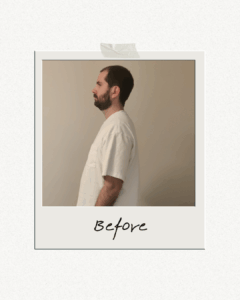
Stage 1: Recognition
We begin with a full assessment:
• Posture
• Breathing
• Neuromuscular testing
• Movement patterns
• Fascial restrictions
This reveals the pattern your nervous system created.
.
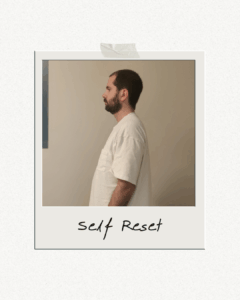
Stage 2: Self Resets and Body Literacy
Most clients improve by sixty to seventy percent during this stage through:
• Specific resets
• Breath reeducation
• Restoring rib mobility
• Releasing surface compensation patterns
You cannot maintain change if you cannot feel the pattern returning. This stage teaches you awareness and gives you tools to reset yourself.
.
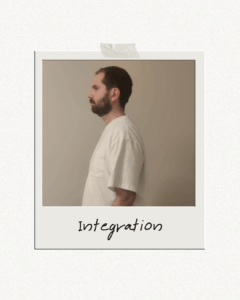
Stage 3: Hands-On Integration
This is where we address the deeper layers:
• Fascial restrictions
• Visceral mobility
• Lymphatic drainage
• Subsystem coordination
This work provides the remaining transformation and helps your nervous system shift from survival mode to rest and digest.
Who This Helps
This approach supports people dealing with:
• Chronic neck pain
• Chronic hip or low back pain
• TMJ tension or jaw clenching
• Shoulder and rotator cuff issues
• Pelvic floor gripping
• Chronic headaches
• Brain fog
• Fatigue that feels out of proportion
• Loss of balance or coordination
• Posture changes
• Forward head posture
• People who feel disconnected from one side of their body
• Athletes stuck in compensatory patterns
• People who have tried everything and still feel stuck
If you have been managing symptoms instead of understanding the pattern, this work is made for you.
Common Questions
How long until I feel results
Most people feel shifts in the first session. Full pattern change often takes three to six sessions.
Is this massage
No. This is neuromuscular reeducation, lymphatic support, breathing integration, and pattern retraining.
Do I have to come forever
No. The goal is to teach you what your body needs so you can maintain the change.
Why would this work if nothing else has
Because we do not chase the pain. We address the unconscious gripping pattern driving it.
Can this fit with my other care
Yes. This work pairs well with physical therapy, chiropractic, acupuncture, and strength training.
Do you work intraorally or internally
I do work intraorally when it’s appropriate for your jaw, tongue, and upper neck patterns.
This includes gentle work inside the mouth on the muscles that link directly to your suboccipitals, hyoid, diaphragm, and even your pelvic floor through the deeper fascial chains.
I do not do internal pelvic floor work.
I refer out to trusted pelvic floor specialists for internal care.
What I can do is support the system around the pelvic floor.
When the jaw, diaphragm, hips, and breath mechanics are working together, it helps reinforce the progress you make with pelvic floor therapy. Many pelvic floor specialists actually recommend pairing their work with neuromuscular therapy because the surrounding compensation patterns must also be addressed for lasting change.
The Bottom Line
Your body is not broken. It is adapted. These patterns are not failures. They are solutions your nervous system created to help you.
When you release unconscious gripping patterns and restore rib motion, breath, symmetry, and proprioception, your body shifts from survival to support.
You do not need to force your body to let go. It needs to feel safe enough to release.
Ready to Feel Grounded in Your Own Body Again
Discovery Sessions are available in Wicker Park, Chicago. In your session we will map your compensation patterns, identify which systems are blocked, and begin teaching your body how to let go.
📍 Book your Discovery Session
Link in bio or website
